mail: palencia(at)ifca.unican.es
Office: 113
José María Palencia (Chema)
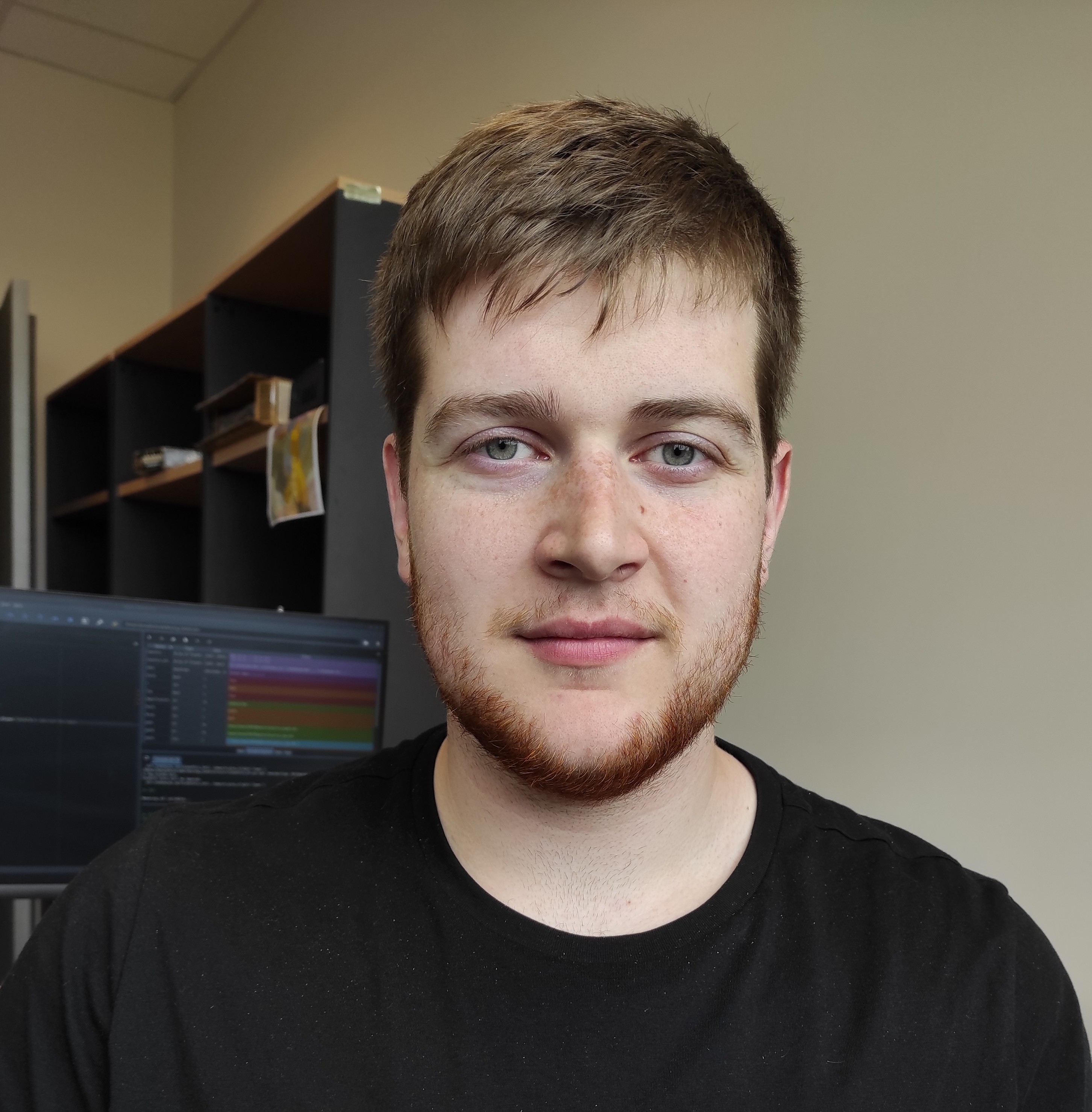
I’m Chema, a postdoc at IFCA, formerly PhD candidate in cosmology and astrophysics, funded by an FPI grant from the Spanish National Research Council. I completed both my bachelor’s and master’s degrees at the Universidad de Cantabria in Santander, Spain, where I worked on early projects involving the Cosmic Microwave Background (CMB), machine learning, and signal processing. Since starting my PhD in September 2021, under the supervision of José María Diego and Bradley J. Kavanagh, I have focused on strong gravitational lensing by galaxy clusters, the dark matter distribution within them, and microlensing of stars by compact lenses in galaxy clusters.
My research focuses on galaxy clusters, which serve as nature’s largest gravitational lenses. I specifically study the microlensing of stars or other compact, bright sources in lensed galaxies caused by compact structures within the galaxy clusters. While the overall lensing of the galaxies is due to the mass distribution of the cluster as a whole, the microlensing is driven by smaller, dense structures within the cluster, mainly stars and compact dark matter. This novel technique not only reveals the compact structure in galaxy clusters, but also helps differentiate between dark matter models, probe small-scale structures in the CDM model, and study populations of stars and other sources at high redshift that would otherwise be unobservable. Additionally, it may shed light on cosmological tensions by offering new and complementary probes. My work is both theoretical (simulation-based) and experimental, involving data from HST and JWST.
Research interests
- Dark Matter
- Galaxy clusters
- Cosmological Tensions
- High performance computing
- Machine Learning
Collaborations & Missions
Back to people.