The interests of the members of the Cosmology Group at IFCA cover a wide variety of topics in cosmology. Since there is a strong emphasis of the group on observational cosmology, we also contribute to many collaborations, missions and international projects related with these research lines. You can find some more details about our research interests below.
Research Lines
- Cosmic Microwave Background
- Dark Matter
- Galaxy Formation and Evolution
- Gravitational Lensing
- Large-Scale Structure
- Line-Intensity Mapping
Cosmic Microwave Background
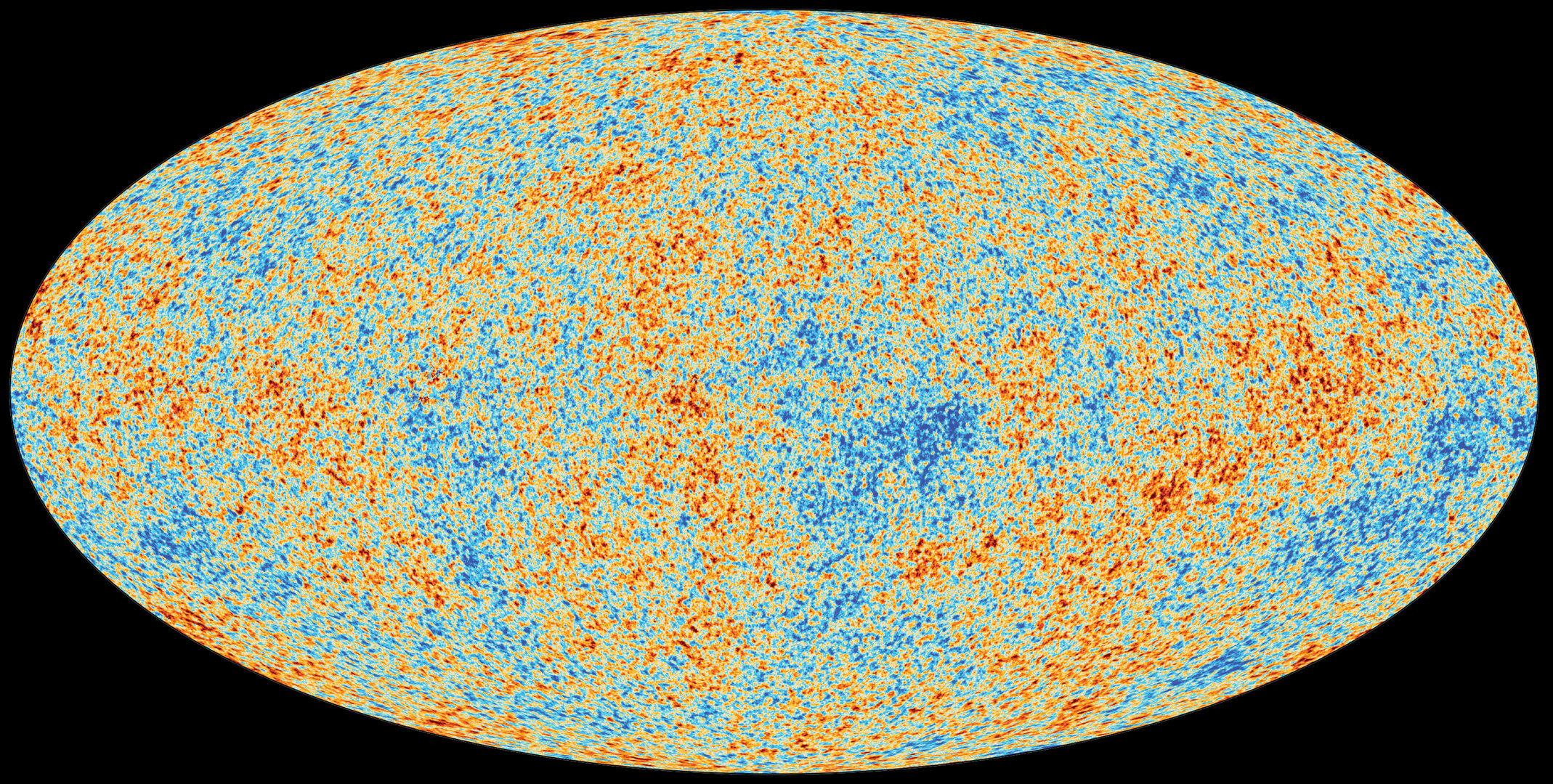
The Cosmic Microwave Background is the oldest light in the Universe, a relic from about 380,000 years after the Big Bang. Its discovery and precise measurement have transformed cosmology, providing a cornerstone for the standard model of the Universe. Studies of the CMB have revealed its near-perfect blackbody spectrum, tiny temperature anisotropies, and polarization patterns, which encode information about the Universe’s composition, geometry, and evolution. Our research focuses on extracting this information with increasing precision. Past missions such as COBE, WMAP, and Planck established the ΛCDM model and measured key parameters like the age, curvature, and matter content of the Universe. Today, the major goals are even more ambitious: detecting the faint B-mode polarization signal from primordial gravitational waves, constraining inflationary models, and probing physics beyond the Standard Model.
In addition to anisotropies and polarization, spectral distortions of the CMB spectrum offer a new window into the thermal history of the Universe. These distortions can reveal energy release from early processes such as particle decays, primordial black holes, or small-scale structure formation, providing complementary constraints on fundamental physics. We also explore secondary effects imprinted on the CMB, such as gravitational lensing and the Sunyaev-Zeldovich effect, which trace the distribution of matter and hot gas on large scales. These measurements help us understand the formation of cosmic structure, the role of dark matter and dark energy, and the properties of neutrinos.
This research line combines theoretical modeling, data analysis, and participation in leading international experiments, ensuring a lasting impact on cosmology and astrophysics.
Researchers involved
- Rita Belén Barreiro
- José Luis Bernal
- Francisco Javier Casas
- Biuse Casaponsa
- Laura Castelló
- Jyothis Chandran
- Marcos Cruz
- Christian Gimeno-Amo
- Diego Herranz
- Md Ishaque Khan
- Airam Marcos-Caballero
- Enrique Martínez-González
- Mathieu Remazeilles
- Miguel Ruiz-Granda
- Patricio Vielva
Related collaborations we are part of
Dark Matter
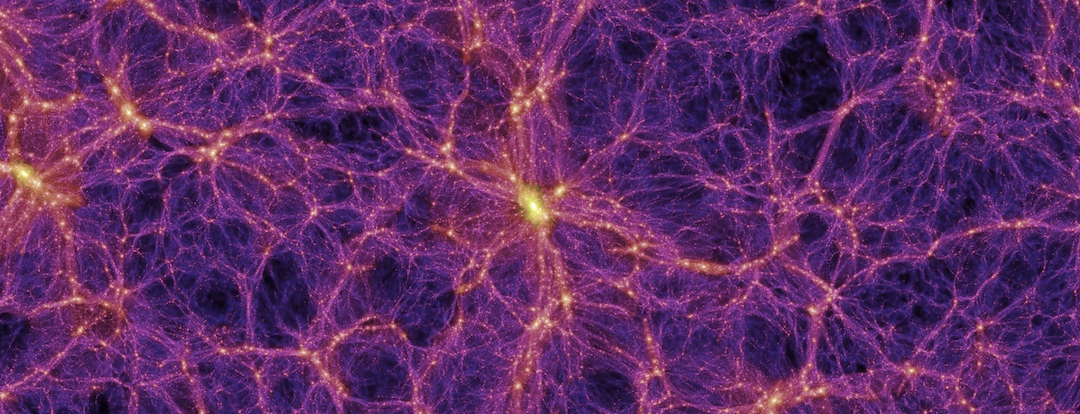
The nature of Dark Matter (DM) remains one of the greatest unsolved mysteries of modern physics. The group is involved in a number of initiatives to shed light on the nature of Dark Matter, across scales from the cosmological to the microscopic. Studies of the CMB and large scale structure allow us to constrain the total abundance and distribution of DM in our Universe, while we also explore how the interactions of DM may show up in cosmological observables.
With gravitational lensing we can map out the distribution of DM in galaxy clusters, allowing us to search for DM substructures, and providing us with a means of distinguishing between particle DM, wave-like DM or DM in the form of compact objects such as primordial black holes. We have also made important contributions to the use of gravitational waves as probe of dark matter on small scales, a field that will reach maturity with the Einstein Telescope.
On the scale of galaxies, the properties of DM may affect the nature and number of substructures such as streams and satellite galaxies. Our group leads the ARRAKIHS mission, a planned space telescope which will image nearby low-surface brightness galaxies at unprecedented sensitivity to provide the definitive test of the nature of DM.
In collaboration with the high energy physics group, the cosmology group also contributes to direct searches for Dark Matter in the lab, including the DAMIC-M experiment, which searches for DM using low-background Charged Coupled Deviced (CCDs) as sensitive ionisation detectors. IFCA also contributes to the development of CADEx, a next generation search for dark matter axions at W-band frequencies.
These observational and experimental probes of DM are complemented by phenomenological studies to understand how possible signals of DM may show up in these experiments and what we may learn about DM if it does.
Researchers involved
- Rita Belén Barreiro
- José Luis Bernal
- Francisco Javier Casas
- Laura Castelló
- José María Diego
- Helena Domínguez-Sánchez
- Rafael Guzmán
- Diego Herranz
- Pratibha Jangra
- Bradley J. Kavanagh
- Nicolas Longeard
- Airam Marcos-Caballero
- Enrique Martínez-González
- José María Palencia
- Abram Pérez Herrero
- Francesca Scarcella
- Patricio Vielva
Related collaborations we are part of
Galaxy Formation and Evolution
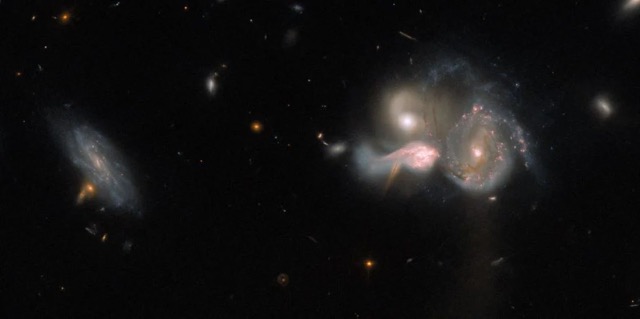
Understanding how galaxies form and evolve across cosmic time is a central goal of modern cosmology. At the Instituto de Física de Cantabria (IFCA), our research combines theoretical modeling, numerical simulations, and multi-wavelength observations to study the physical processes that drive galaxy assembly, star formation, and structural transformation, as well as their connection to dark matter and the large-scale structure of the Universe. Particular emphasis is placed on the interplay between baryonic physics and environment, from the earliest phases of galaxy formation to the low-redshift Universe.
IFCA plays a leading role in several major international surveys and space missions. We are actively involved in Euclid, exploiting its high-precision weak lensing and clustering measurements to link galaxy evolution with cosmic structure growth. Our work is complemented by spectroscopic and imaging data from HETDEX and J-PAS, which provide unprecedented constraints on galaxy properties and their evolution over large cosmological volumes. At higher spatial resolution and longer look-back times, observations from JWST and HST allow us to probe the internal structure and stellar populations of galaxies across a wide range of redshifts. In addition, IFCA is the lead node of the international collaboration of ARRAKIHS, an ESA-led mission dedicated to unveiling the low-surface-brightness Universe and the faint outskirts of galaxies, providing unique insights into galaxy assembly and accretion processes.
In the radio domain, IFCA researchers contribute to surveys such as MeerKLASS and prepare for the transformative science of the Square Kilometre Array Observatory (SKAO). These facilities enable detailed studies of neutral hydrogen, star formation, and feedback processes, offering a complementary view of galaxy evolution beyond the optical and infrared regimes. By combining data from these flagship facilities, IFCA aims to build a coherent, multi-scale picture of galaxy formation and evolution within the cosmological framework.
Researchers involved
Related collaborations we are part of
Gravitational Lensing
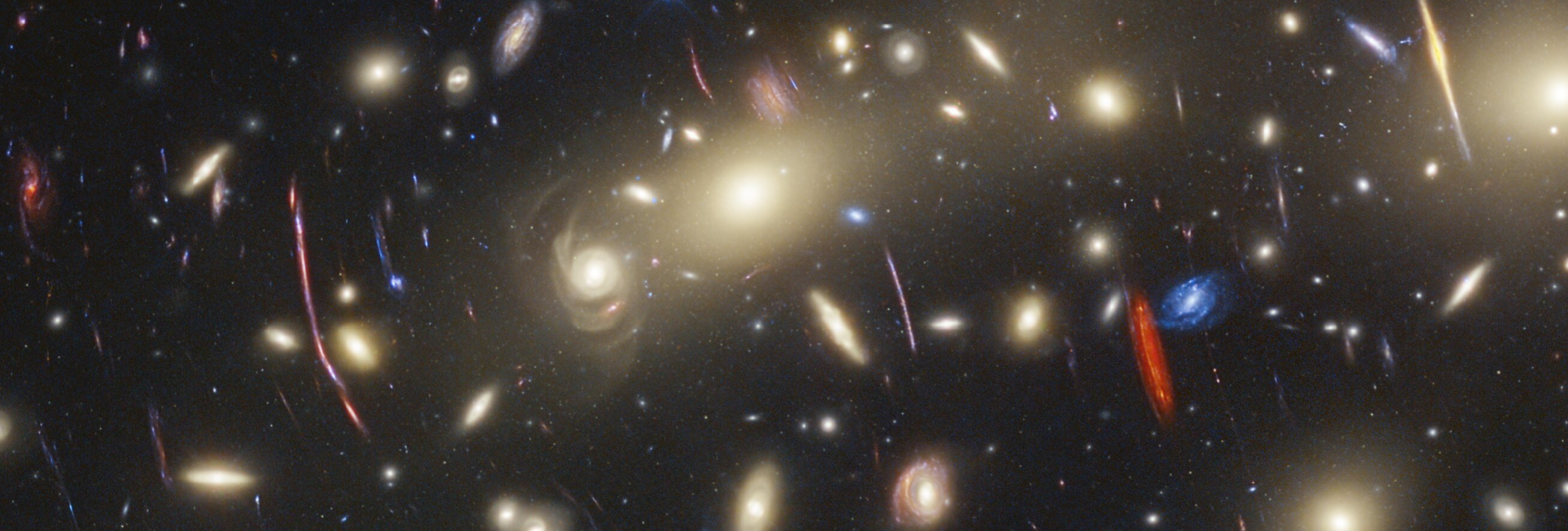
Gravitational lensing is produced due to the warping of space-time around massive structures. The group is specialised on gravitational lensing around the most massive structures in the universe, galaxy clusters. We take advantage of the best observatories on Earth (actually in orbit around Earth and at Lagrange point L2), namely the Hubble Space Telescope (HST) and James Webb Space Telescope (JWST), with which we have secured over 500 hours of observing time together with our collaborators. The group has developed its own techniques and algorithms to reconstruct the distribution of matter (mostly dark matter) in galaxy clusters using the gravitational lensing effect. In addition, we use this striking phenomenon to constrain the cosmological model via the difference in arrival time (or time delays) between the light rays from different multiple images of the same background time-variable object, such as quasars or supernovae. The gravitational lensing group at IFCA has used time delays to measure the expansion rate of the universe, or Hubble constant, through this technique.
The next years will witness a rapid evolution in this field, as new data from JWST, Euclid and Rubin-LSST are expected to provide tens of cluster-lensed variable sources, with measured time delays, which will be used to reach a competitive percent level precision in the measurement of the Hubble constant. The group at IFCA is also making leading contributions in the area of microlensing of distant stars (z>0.5), and has contributed to the discovery of most of the lensed stars beyond z=0.5 known to date (Icarus, Warhol, Spock, Quyllur, Godzilla, Mothra, Earendel, Hedorah, …). Our group uses changes in the observed light from these stars to trace small perturbations in the distribution of dark matter. We have also made important contributions to the use of gravitational waves as a probe of dark matter on small scales, a field that will reach maturity with the Einstein Telescope.
Within Euclid, we are involved in the discovery and analysis of new gravitational lenses (both on galactic scales and galaxy cluster scales). We are also involved with other ongoing and complementary surveys such as the Spanish lead J-PAS, bound to discover new galaxy clusters and will play a crucial role at identifying member galaxies given its high-quality photometric redshifts. We are also part of the Rubin-LSST collaboration, contributing within the Dark Energy Science Collaboration (DESC) and Strong Lensing (SL) Science collaboration. Our interests lie in finding new and unique lens galaxy clusters and exploit them as cosmological probes.
Researchers involved
Related collaborations we are part of
- EUCLID
- J-PAS
- JWST & HST
- Rubin (LSST)
- RST (Roman Space Telescope, to be launched on Sep 2026)
- ET (Einstein Telescope)
Large-Scale Structure
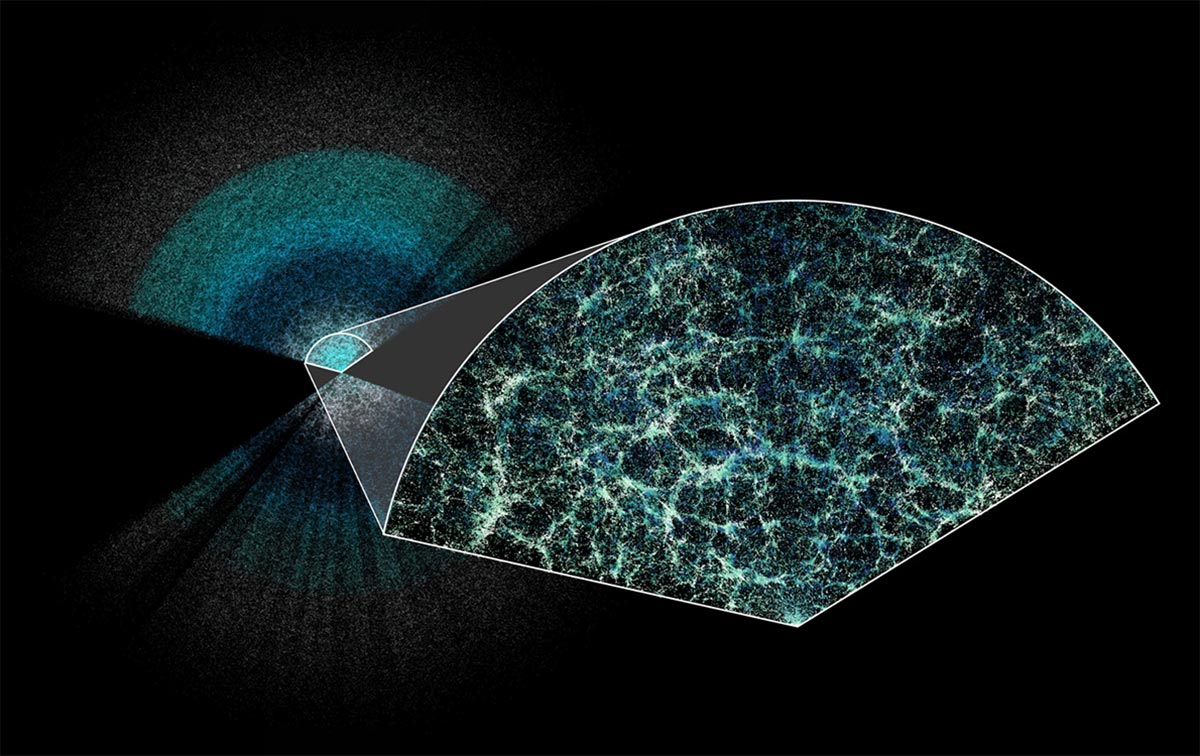
The large-scale structure of the Universe refers to the distribution of matter at late times, when gravitational evolution has already pushed cosmological perturbations to the nonlinear regime and the cosmic web has formed. These perturbation undergo gravitational collapse, and dark matter halos form. In them, galaxies and gas cluster, becoming the baryonic part of the large-scale structure.
The way in which matter clusters in the Universe depend on two things: the initial conditions and the physical laws that drive their evolution. Given a cosmological model, we can predict the statistics that describe the matter distribution. Therefore, we can use matter distribution to learn about these two key points of our understanding of the Universe. However, the vast majority of matter is dark matter, which we cannot observe; the only probe of the large-scale structure that we can directly connect to the matter distribution is gravitational lensing (since it depends directly on the gravitational potential).
Nonetheless, there are many other ways that we can probe the matter distribution, using so-called tracers, including galaxies positions, integrated intensities, effects in the CMB through the secondary anisotropies, etc. They trace the large-scale structure in different ways, connecting it also with different baryonic physics. These features also help to discriminate between gravitational evolution and baryonic feedback at small scales, a regime that is already more complicated due to nonlinear clustering. There are many theoretical and observational efforts to improve our understanding of this regime to increase the scientific return from observations.
At IFCA, we work on improving observational maps of large-scale structure tracers, cleaning from foregrounds and contaminants of maps of integrated intensities and CMB secondary anisotropies. We also work on theoretical developments to improve the modeling and pipelines to be applied to such maps, so that we can take the most from them and use them to shed light in the biggest questions in cosmology.
Researchers involved
- José Luis Bernal
- Helena Domínguez-Sánchez
- Airam Marcos-Caballero
- Enrique Martínez-González
- Guillermo Martínez-Somonte
- Sefa Pamuk
Related collaborations we are part of
Line-Intensity Mapping
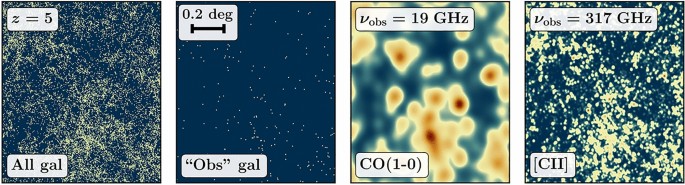
Line-intensity mapping (LIM) is a technique that employs low-aperture instruments to quickly scan the sky and collect all the incoming radiation, targetting identifiable spectral lines to recover radial information through good experimental spectral resolution. Since it does not requires to resolve individual sources, LIM provides access to redshifts well beyond the reach of galaxy surveys and is also sensitive to the population of faint sources that are hard to resolve individually. This provides direct access to epochs of the history of the Universe and regimes that are inaccessible otherwise.
Since overall fluxes are measured, LIM is both sensitive to the large-scale matter distribution and the astrophysical processes that drive the emission of each line in atomic and molecular gas clouds within and around galaxies. Thus, targetting several spectral lines provides a more complete picture of the interstellar and intergalactic media. In summary, studying intensity fluctuations with LIM promises to deepen our understanding of various questions related to galaxy formation and evolution, cosmology, and fundamental physics, while being complementary to other techniques and cosmological probes. Unfortunately, the main benefits of LIM also come with the drawback of foreground contamination.
Besides general theoretical work improving the formalism to measure summary statistics from the line-intensity maps and get a theoretical prediction and developing new science cases, we work on foreground mitigation in order to obtain clean observations free of foreground contaminants.